
Fog and Light
The clouded breath of fog must be thinning, the syrup of light must be thickening, and a renewed day must be asking for its daily alms of praise.

Stories in this – second – series, Fog and Light, were written between November 2008 and October 2009, and originally published in The Kathmandu Post. They are works of non-fiction.
It is an old photograph taken along a road winding through the Shivapuri jungles and through memories shared by two boys, both equally gaunt and dreamy in the picture. But it is also a startling encapsulation of a youth and innocence long since lost. That was a different world, before divisions and multiplication of identity, when the dominant ideology was unity rather than faction. One of the boys had indulged in a prank, a frank misdemeanor the night before that hike, and had kept it a secret from the other boy. In the absence of discovery and its consequent accusations, the two boys in the photograph look simple and youthful, looking straight into the camera as if in anticipation of the moment when the picture would be rediscovered, held up fondly against the illumination of a compact fluorescent lamp drawing its parting burst of light from an overtaxed inverter.
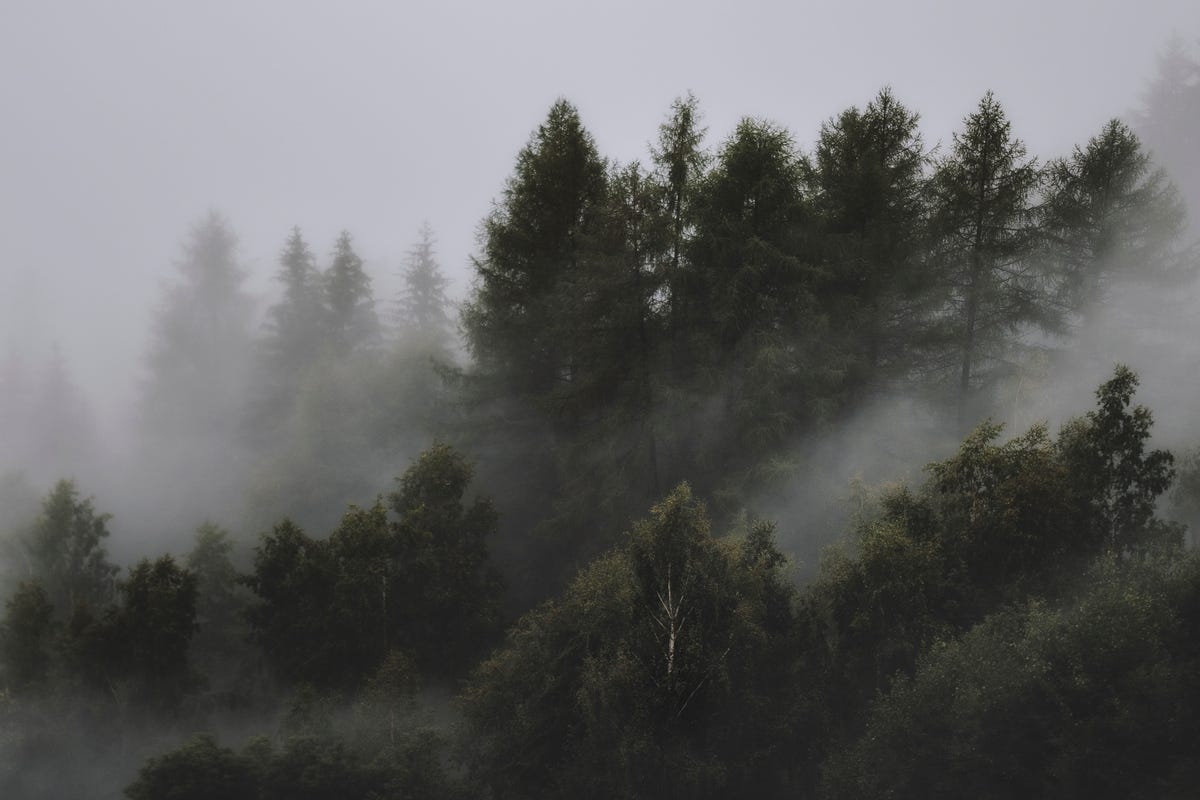
Like the fog outside the window, memory spreads thin over a recalled territory and makes indistinct the particulars, swallows entire shapes and creates believable threats out of benign ghosts. Janakpur slowly awakes, as if insisted upon by the yearning search of eyes and minds that want a firm grip over things made wispy by others. The boy in the picture is the same idea as the invisible rickshaw puller, who navigates through thick fog by following the flicker of tea-stall fires and the cries of babies coming from huts that ring the cold, silent ponds of the city. In either case, it is a similar journey towards a familiar and necessary destination, while groping in the dark for familiar and necessary signs by which to guide the progress ahead. The efforts of the deceived boy in the picture and the rickshaw puller running an old route are fated to similar disappointing ends, revealing a place that loses its allure with each new visit, forced to face the disappointment that the encounter with the destination is, after all, only quotidian and weary.
Then Bikram pulls out a photograph of a girl we were both crazy about in high school but never had the courage to approach. His daughters, Khushi and Roshni, burst into the room, giggling to catch my attention and hiding behind their father because, at three and five, they are not fond of chin-stubble rubbing against their faces. I pinch Khushi’s nose but it is Roshni who starts to cry, perhaps because her infant mind cannot separate her older sister’s nose from her own, or because she can empathize with herself well into the next five minutes, where she finds herself ambushed by my coarse chin. I make up my mind to steal the photograph on my way out of Janakpur because Bikram won’t let me have it. In the photograph, the girl for whom I wrote my first poems looks exactly like I remember dreaming of her during those feverish years of adolescence. I slip the picture into a book I am carrying for the train, not because I want to possess her picture, but because I want to free her from the confines of his recollections: a place which, in my jealousy, I picture as unfit for her, and for him, now that he has Khushi and Roshni in his life.
The theft is swift and gleeful and, to my mind, a noble tribute to the boy I was once, unkempt, disarrayed by the frenzies of puppy love. Thus justified and gloating inwardly, I step outside to the alleyway and blow on the blanket swirl of fog, as if to part through it a channel to clarity with nothing but my gentle breath for weapons. Then I remember a constant second and menacing face of Janakpur— this city is also the murder capital of the Terai, a place where they sent fifteen violent men with khukuris to kill and silence a woman sitting in her house. The fog is dense and white and it bleaches the color away from every surface, but even this fog must have in it a pool of crimson and a moving veil of thirty tainted hands that cannot hide forever the faces behind the crime. The tinny tinkle of a cycle rickshaw’s bells is heard coming around a corner. I step backwards into a barber shop before the rickshaw emerges into sight.
Back in the house, as her father follows the priest’s instructions and offers thanks for a newborn son, Khushi climbs into my lap. I am lost in thought, still unable to decide why I want to steal the photograph, why I should want to be thought of fondly by a girl from what was my childhood. I haven’t seen her in nearly nine years, and I doubt if I will see her again soon, yet every moment of adolescence that I recall through the prism of my attachment for her becomes filled with the perfume of her presence. But my attention is called back to the present by another girl for whom I instantly feel love because she is like my own: although Khushi wants my attention and starts a conversation in Hindi, she warily eyes my cheeks and chin. I take her hand and run it over a freshly shaved and moisturized face. She likes how it feels. She runs her tiny hand over my chin and calls to her sister and laughs, as if discovering a new face to a familiar old mystery. Outside, the clouded breath of fog must be thinning, the syrup of light must be thickening, and a renewed day must be asking for its daily alms of praise.
—
Prawin Adhikari is a writer, translator and editor. He is the author of Budhani (2025), Folk Gods (2019) and The Vanishing Act (2014). He has also translated Han Kang’s The Vegetarian into Nepali. He recently translated Narayan Wagle’s Koreana - Coffee Guff into English.
 | A guest post by
|